|
|
|
|
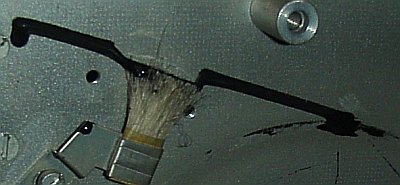
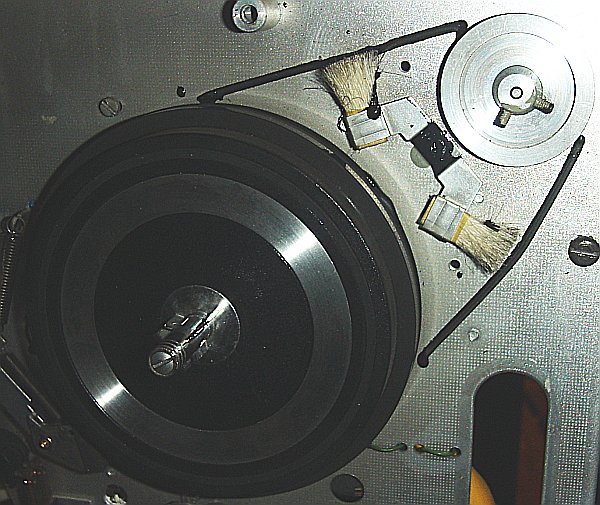
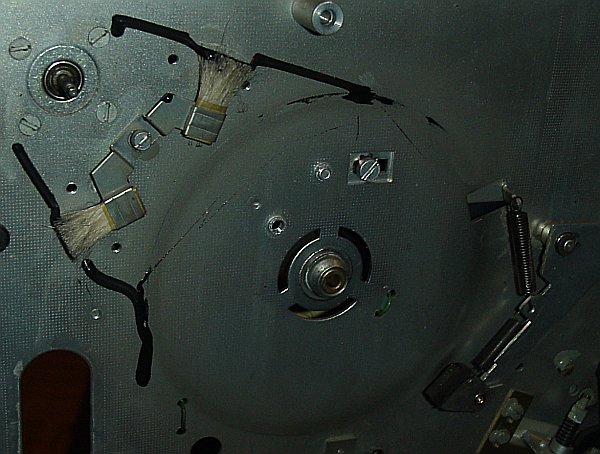
The upper and following images show the remains of the drive belts of a Philips N 4450.
It is now just an extremely viscous, black mass with rather unpleasant properties:
• resistant to most cleaning agents and therefore very difficult to remove
• stains hands, textiles, and everything else it comes into contact with
|
|
|
|
|
|
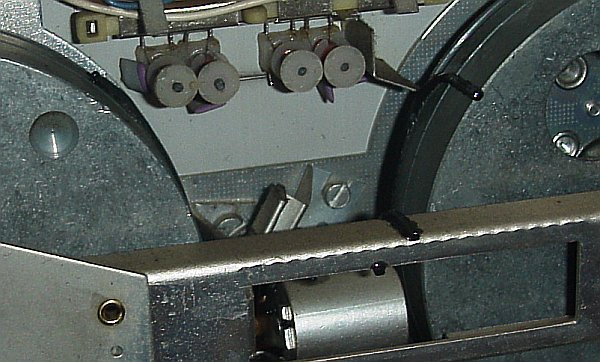
I am not aware of the exact reasons for these resolutions.
The most important factor is probably time, although time here is measured in decades.
To my knowledge, rubber can only be decomposed by ultraviolet radiation and grease.
However, ultraviolet radiation is not expected to be present in large quantities under the screw-fastened covers of a tape recorder.
So only the fat remains.
There are certain amounts of this substance in such devices.
But as already written......
......I don't know exactly either.
If any of my readers can contribute more on this topic, I would be interested to hear from you.
|
|
|
|
|
|
After lengthy trials with various cleaning agents, the following results were obtained:
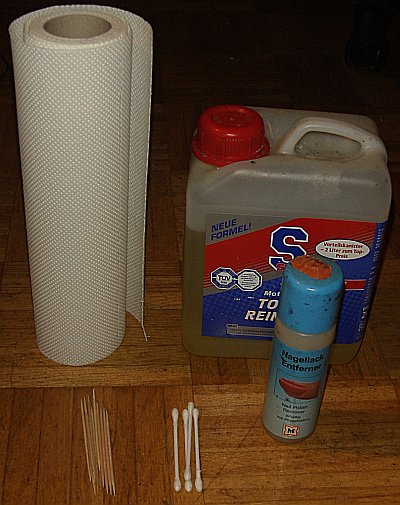
• Acetone (nail polish remover) = highly effective, but unfortunately dissolves some plastics.
Therefore not suitable for plastic pulleys, for example.
• Cold cleaner (the same one I use to clean my Kawasaki Z 1000 SX) = very effective, can also be used to clean the plastic parts described above.
• Alcohol, methylated spirits = usable
• Gasoline = usable
• various household cleaners = useless
• Soap = useless
• Detergent = useless, so you should also avoid getting “liquid rubber” on your clothes.
Even a brand-name washing machine would be overwhelmed by that.
|
|
|
|
|
|
|
Above is a selection of the tools used.
Not pictured is the pack of disposable vinyl gloves that I ended up buying after scrubbing my hands for hours.
|
|
|
I think the procedure for removing the rubber residue is actually quite simple.
However, there are a few things to keep in mind:
•
Work carefully!
The remains of the old rubber are quite aggressive and can destroy any new belt within a very short time.
The toothpicks in the picture above are intended, for example, to remove even the last remnants from the pulleys.
• Anything that can be dismantled should be dismantled.
It is much easier to soak a pulley in solvent and then clean it than to do this work somewhere in the winding bowels of a tape recorder.
• Document. It's always good to have a few pictures on hand during assembly that show where this little spring really belongs (based on experience).
In the age of digital cameras, this should no longer be a problem.
Documents. If possible, you should obtain the service documents for the device in question.
The N 4450 is available for free download elsewhere on my website (Section: Downloads).
The lubrication instructions are particularly important, as the cleaners also remove any grease.
|
|
|
|
|
|
|
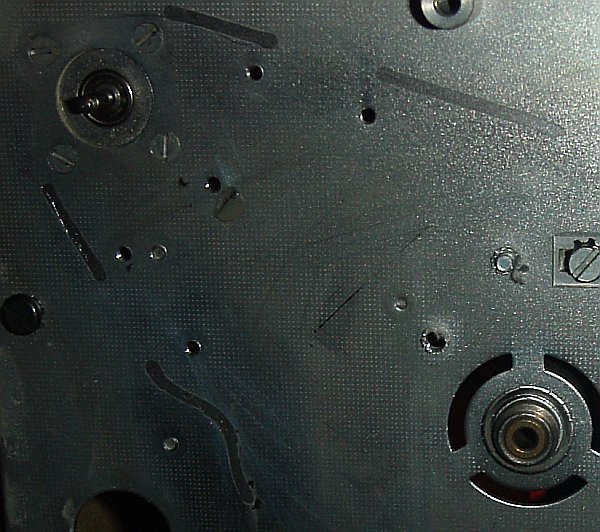
Below are a few pictures showing the condition after the work, which, incidentally, took several hours.
Top left side.
The discoloration in the metal can no longer be removed.
|
|
|
|
|
|
|
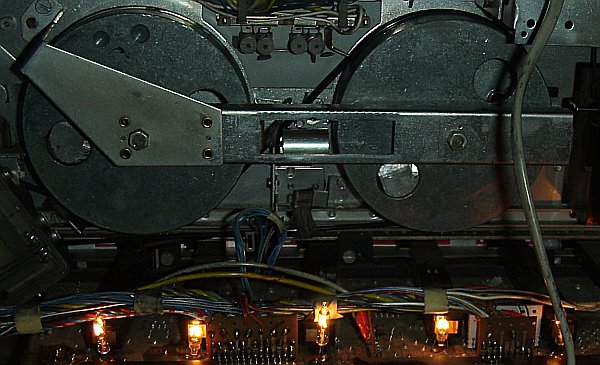
The two flywheels with new belts.
Behind them, you can clearly see the lights for the switches (which are also new, by the way).
|
|
|
|
|
|
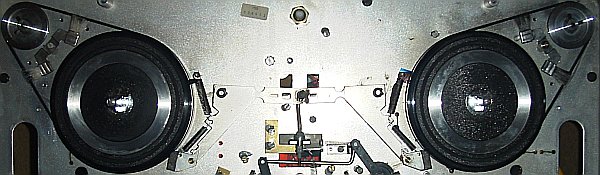
| Here are the left and right spool plates with new belts.
|
|
|
|
Now, as promised above, a few words about the “worst” thing that can happen to a tape collector.
We are talking here about precisely such phenomena in (rubber) pressure rollers.
The causes and effects are the same as with belts, but unfortunately the consequences are much worse.
This is because such pressure rollers are considerably more expensive than a set of belts.
Unfortunately, they are no longer available for many devices.
|
|
| ↑ back to top ↑ |
|
| (C) Chr. Reeg www.tonband.net
|
These pages were last modified on: 15.02.2026 at: 13:05:09
|
|